

THE KOINOS PROJECT is an online educational platform restoring humanity to the Humanities: a place for the intellectually curious, but educatedly stunted searching for something more—for a true mythos. Subscribe now to stay up to date on all our offerings.
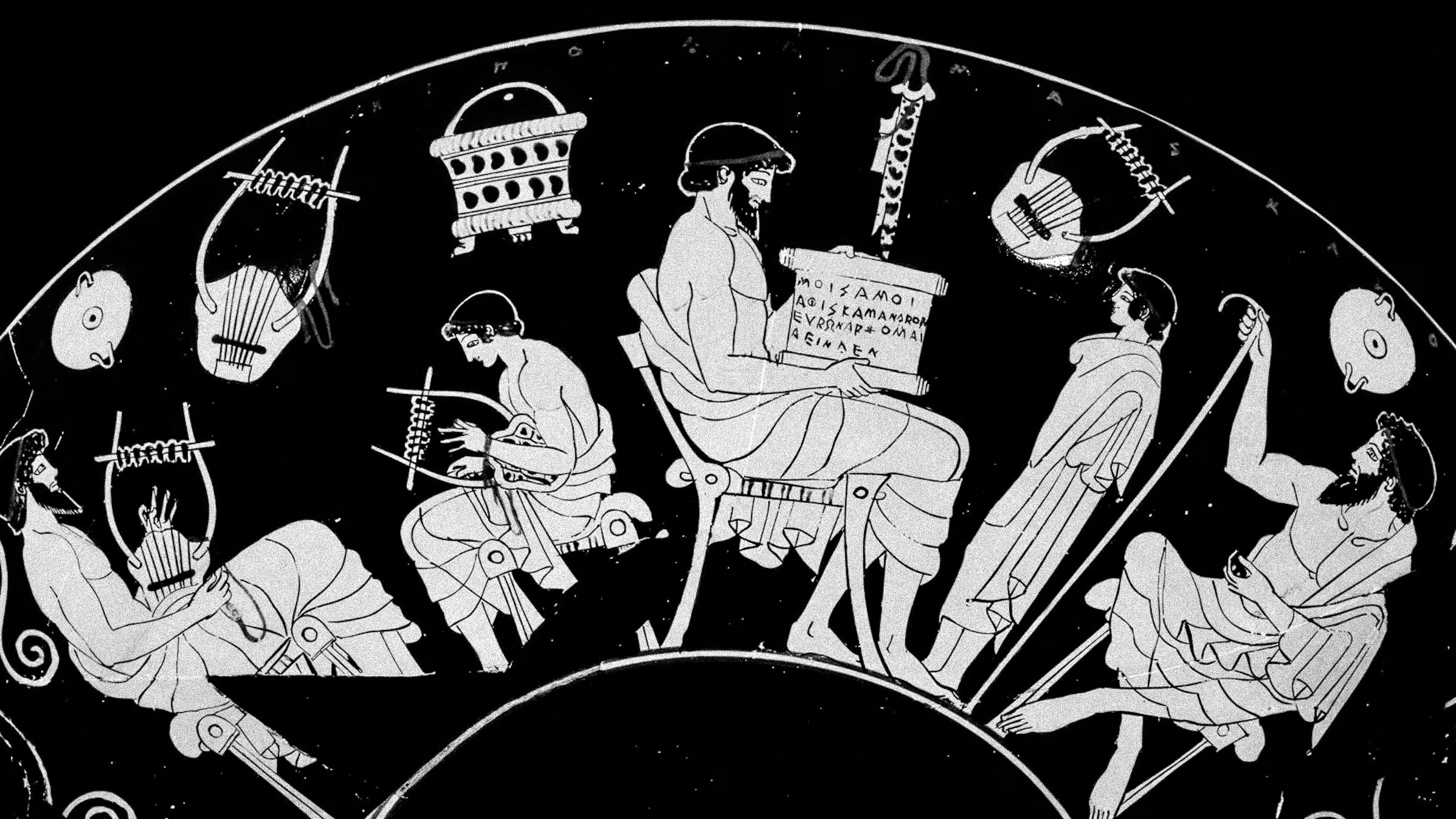
It seems that the history of the western mind has come full circle. There are now many brave souls once again taking up a rebellion against the rule of the academy in much the same way that many rebelled against the “schoolmen” at the dawn of the Enlightenment. But whereas then it was the partisans of Metaphysics, Philosophy, and even Theology who had become overly rigid, it is now these same partisans who seek to use these tools to elaborate a true vision of the way things are — in every way elevating the soul to its supreme place in the human person, freely inquiring into the truths of God, man, and the cosmos. It is, on the other hand, those children of skepticism and rigor, heirs of the Enlightenment — humanist in the gross sense of the word — who have now become rigid, close-minded, exclusive. While they once sought the general enlightenment of all, they now impose their learning in the form of dogma, excluding any thinker who drifts from the mainstream they now control.
Science is not thought of by the masses as it should be — as a diligent and exacting inquiry into the nature of things — rather as the magisterial pronouncements of those meritorious enough to occupy important positions in institutions. Should not all students take to their own inquiry of nature that they might understand it in a manner less abstract? And worse, poetry is not given to these same masses as a means of binding together the disparate aspects of reality, symbolically ordering the soul and imagining a beautiful whole of things, but is rather critiqued and dissected until it is deprived of all beauty. Did the medieval schoolmen ever do anything so monstrous as deprive poetry of Beauty?
Finally, philosophy today has been reduced to a mere game of logic. If philosophy, so called, ever manages to break out of these logic games, it simply serves science. Everything is directed towards an endless accumulation of facts to the end that mankind may, perhaps, stumble upon another technological innovation making the sciences a game of smoke and mirrors, whereby people find it true only because of the marvels it produces. We thus have a science which does not enlighten and a poetry that has been treated in the manner of an atom, yet spend much time wondering why so many have been driven to great, sometimes fatal, psychological distress.
Science needs philosophy to return to its original purity. Those who study science, did they not take up their pursuit in a spirit of innocence and wonder? Were they not captivated by the immense vastness of the universe or the grand complexity of the body? But under our current regime, the order that a young man or woman experiences when they first come to love the sciences is stolen from them by a cold, calculating, utilitarian mindset. All their strivings are forced into the logic of accumulation and technological progress. Only through philosophical and theological grounding will this original vision return. Only then will science justify itself by something other than the almighty dollar.
Philosophy need not be a harsh mistress, nor the servant of the elite. What else is philo-sophia but a love of Wisdom diligently sought after and patiently cultivated in a mind bereft of order and meaning? How is it that those enlighteners of mankind have taught so many to neither love Wisdom nor seek her diligently? If there is such a thing as Wisdom, must she not reside in a well-ordered soul. Yet they have taught us to also reject the soul, making it an “epiphenomena” of matter — whatever that may be. If they had not also destroyed our literary tradition, and with it literacy in any meaningful sense of the word, they would have read in Pascal that “it is impossible for matter to think itself.” With one line their scheme dismantled.
While these subjects have been retained in disfigured form, there is one subject that has been banished all together — Theology. In almost all our reasonings, it is assumed a priori that God either does not exist or that he does not have a Voice. While some universities maintain their Theology departments, are these not mere relics of ages gone by? Do they have any real effects on thought in other subjects? When they do speak, must they not completely subject themselves to the findings and methods of the sciences? It is clear to many of us that God has not only spoken in a special way, but also in a broad way. This special way was once so powerful that it did not fail to affect a single person on the planet earth; and the broad way is so all-encompassing that it should not fail to affect a single one of our thoughts.
To exile Theology from thought is to strand man in a world of uncertainty where thought is ultimately taken captive by the powerful who see the sole purpose of knowledge to be power. If we ignore God, we do not thereby live in a godless world, but will find new gods for ourselves. The tendency among the powerful will be to think of themselves as gods. What then will be the status of those they rule over? How can anyone stand with the oppressed under these conditions and not with the oppressor? Are not “disenfranchised” people and “underserved” communities some of the greatest believers in a God who reveals Himself both by word and in life? Is this not the God of “widows and orphans”? It seems impossible then to be an atheist and not insult the oppressed. Yet we wish not to force anyone from their atheism, but instead to reclaim our own freedom.
If I have written in polemical terms, it is not to appear haughty or boastful, but it is out of a spirit of discontent and righteous anger for those who have fared so poorly under the current culture that their souls and sometimes their very lives have been destroyed. This discontent is clearly shared by many who are now in full revolt, but how barbarous is this revolt becoming? Let us then take up the mantle of that first great western thinker Socrates who after a lifetime of diligent inquiry could claim to know only the things he did not know. For many have been in dialogue with modern western culture for a good portion of their lives and have come to doubt as to whether, for all our great material progress, we are truly better off. Some fear that the effects of this culture are detrimental, not only to the soul, but to our very existence. Thus we put our own culture to the question, just as it was done in Athens long ago.
