

THE KOINOS PROJECT is an online educational platform restoring humanity to the Humanities: a place for the intellectually curious, but educatedly stunted searching for something more—for a true mythos. Subscribe now to stay up to date on all our offerings.
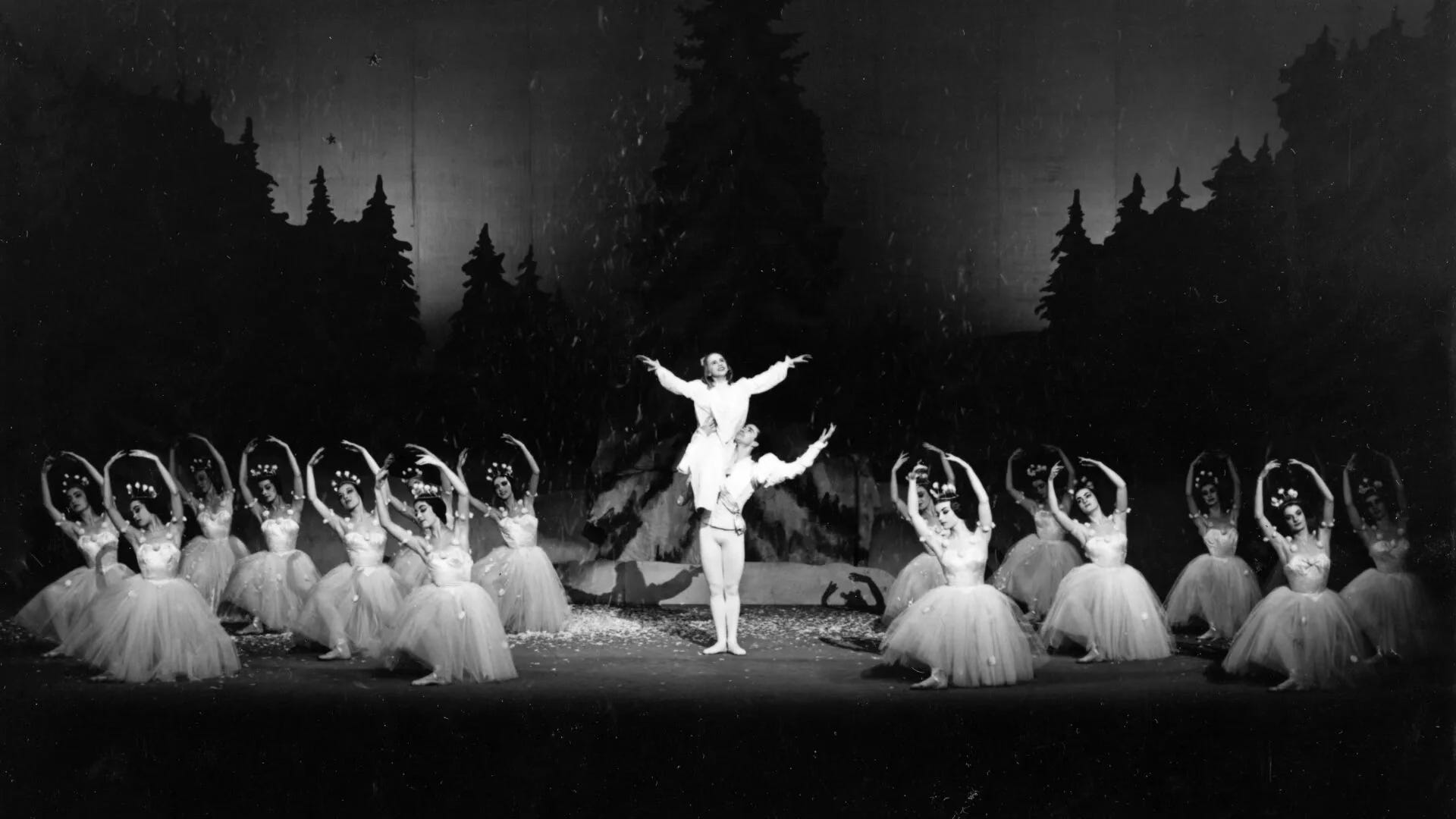
IT WASN’T ALWAYS “Sugar Plum” that first wafted out of the studio and into our ears each September. Often, it was the “Waltz of the Snowflakes.” There is, as with Sugar, such a dark brightness to that music, equal parts haunting and playful, entirely crystalline. Cold and clear and frozen and glittering. My sense of this music is compounded by the immediate image that accompanies it of waiting in the wings, watching and stepping closer—but not quite—to the stage with each count. The palpable sense of anticipation in each of these pieces comes partly thanks to those sparkling notes and partly thanks to that image: the black of the wings, the brightness of the lights out there, waiting. And then—into it, dancing.
I’ve been trying to figure out why Nutcracker does what it does to us. Why do my cousin and I, both dancers, cry every single time Clara lifts that nutcracker up onstage by herself at the end, safely back at home from the Land of the Sweets? Why did my sister, just a few years ago, turn to me and start silently sobbing (and laughing at herself) as the very first notes of the overture began at a younger cousin’s performance? My sister is not a dancer, though she did spend ten years watching me grow through Party Guest (chassé, chassé, shuffle-shuffle-shuffle—we were eight, and shuffle really was the choreo) to Mysterious Doll to Sugar Plum, with everything in between.
But I learned recently it’s not just dancers, or those who live with dancers, who cry at Nutcracker. It might be a nostalgic viewer who remembers seeing the ballet as a child, or sometimes it’s just someone in the audience who is struck by the absolutely perfect chords of this masterpiece. They might learn later any number of contextual facts: that Tchaikovsky composed the score alongside strict instructions for sound and movement from Petipa, the choreographer, or that Tchaikovsky’s beloved sister died just as he began work on this ballet. The latter is, some say, one reason for the sound of the Grand Pas de Deux in Act II—the sadness of which I never liked as a dancer, which was why I yearned every year for the Sugar Plum solo rather than the pas.
But it may be that the viewers never learn these facts, and that they simply sit spellbound, feeling in their bones that the regalness of the pas is as undeniable as the magic of that most famous solo. In those first eight counts of Sugar Plum, they might realize: I don’t know what a sugar plum is, but these strings are without question what one sounds like when it drops or is plucked from its tree. Heavy, sweet, deep, dark. Heady and inviting. They may not know what a celesta is, but they will know that they have rarely been so acoustically enchanted.
For all this, I think the reason Nutcracker disarms us must be two-fold. The first is the music. No better word to describe it than magic. That Tchaikovsky was successful in stitching an entire musical fabric of a glittering winter, a youthful love, an adventure beyond, and home again without one wrong note is one of the best magic tricks we have ever received. Beautiful Baryshnikov in his version and Pacific Northwest Ballet in theirs have understood most clearly the deeper magic of that second item, of Clara’s desire for her Prince and the dream that turns him into a flesh-and-blood man.
The second part of the evocative power of Nutcracker is dancer-specific, and I think this is apt. “A dancer,” said Martha Graham, “more than any other human being, dies two deaths,” because dance is everything, and so, as with most dancing, there must be something almost inexpressible in words. What happens is that Nutcracker gives you a dream for every year of your adolescence. Because it is repeated every year (and it is this magical music that is repeated every year), and because dance means so much to you in the first place and dance requires nothing short of a total involvement from body, mind, and spirit, and because you watch these parts come to you every year that you’ve watched others do for a decade of your life (which at that point is almost your whole life), as a dancer you grow into Nutcracker in a way that is all heart, that is almost impossible to explain. That is perhaps mirrored by the literal dream that Clara grows into across the ballet.
THE COMBINATION OF this consummate music and this evolution full of movement and meaning and dreams danced in studio and on stage, this is the reflex toward tears. It’s ten years of watching, hoping, growing, fulfilling. And dancing, dancing, dancing. And what happens during a six-hour Nutcracker rehearsal on a Saturday in early December, after months in the warmly lit studio with the cold night outside, is that the music is embedded in your body. It becomes a part of your DNA. When you sit on the marley, back against the mirror, and watch the older dancers in their pointe shoes as the music plays from a record—stops—correction—plays again—stops, from the top—plays through—again (and again and again), the notes are being written into your heart, and into each muscle. And really, you are never freer than when you are moving in this intricately structured art form. And perhaps you’d read Jill Krementz’s A Very Young Dancer, an exquisite 1970s look at a School of American Ballet student chosen to play Clara at Lincoln Center—and you will remember the page where she is taught how to fall on the bed and dream. Nutcracker is a world of dreams: of Clara’s and of dancers who are rooted in it for a third of every year and of viewers who follow them from party to battle to sugar plums and back. But because those dancing it have worked and stretched and warmed up for three months prior to performance, breaking in shoes and bandaging toes, the dream is anchored by reality.
Studio and stage are both sacred, but the studio is sweat and life, holy in the earthiest of ways. And let’s not forget the village that builds backstage like an anthill, invisible to those in the seats. Nerves travel in the hallways in direct correlation to the dressing room. Shimmying on tights, checking pointe shoe laces an eightieth time, running through the tile hallways to the stage to wait in the wings—nerves accumulate until the moment of dancing. After a piece, after this triumph, after applause, back through the wings down the tile hallway—a physical seeping out of nerves and immediate desire for legwarmers and Doritos in the noise and chaos of the dressing room. Bobby pins everywhere, smiles in the mirror, and the counters sticky with hairspray. The air permeated by humidity and hairspray. The youngest group, identical in tights and tutus, legs dangling off the edges of a large table and playing a game of telephone during a long wait between dances, laughing with a kind of joyous energy entirely unique to their circumstances. If the stage is otherworldly, the dressing room is bright, loud, tangible cheer. Equally isolated, equally electric, but real, grounding.
Between studio and stage, there is dress rehearsal. Between waking and dreams, this moment of quiet calm in an empty auditorium, both safe and thrilling. And this, too, marks years from eight to eighteen, where you sat, young, feet in tights not reaching the floor with your group in the first rows of seats, waiting for your turn and watching the stage, always watching the turns en pointe, the leaps and lifts and extensions. Or you paused on stage, older, revered—glanced over your shoulder to the wings to hear the correction, adjusted, looked out onto the little groups watching you, and waited for the music to start again. Rise onto those pointes. Feel the support of the box and the shank, don’t sink, pull up through your arch and your ankles. My studio’s surprise intro for the lead-in of Sugar: arms up to fifth, shoulders relaxed, bourrée… and leap.
At the show, there is one more in-between moment. It’s the one in the wings, just between the moments where no one can see you and the ones where you’re in front of everyone. You might, jumping up and down, wave to friends across the stage who are preparing to run on opposite you. You might have to book it behind the backdrop from one side to the other. Maybe you wiggle, shaking out your limbs. There is nothing like this moment. And the one clearest in my mind is the one before Snow: the scene that moves us from the house into the dream, the one that shimmers perhaps more than any other, the one my mom, not a ballerina or a ballet lover by any standard, cried at every year. “Why, Mom?” I was surprised when she told me this; as a dancer it’s not the variation that first jumps at you, and it is always exhausting. “It’s just beautiful,” she said. In the dark of the wings, the light on stage shining, prep your body to meet the notes that twinkle like snow—petit jeté, petit jeté, and up! passé en pointe—and then go.
Follow Meaning and Place here on Substack.
This post first appeared on Front Porch Republic.
